
Last updated November 15, 2026
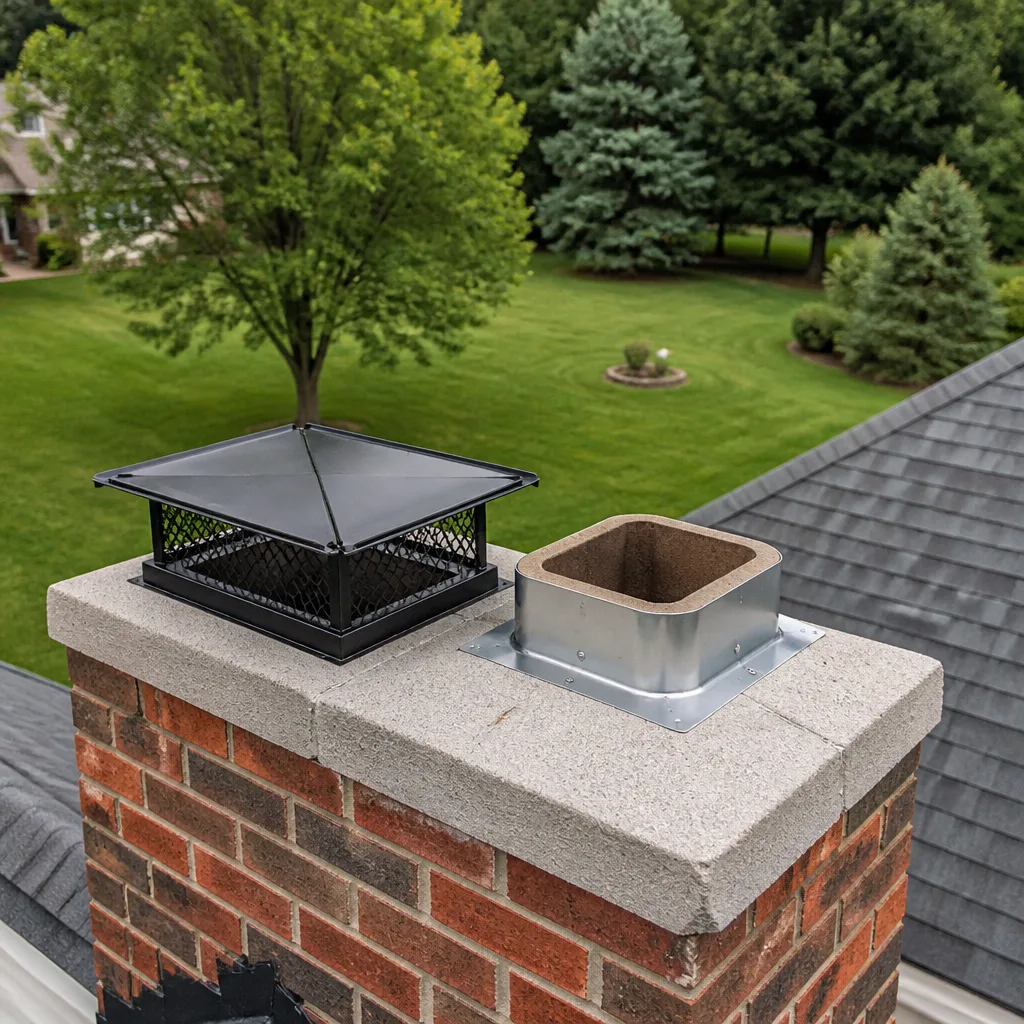 Sweep & inspection
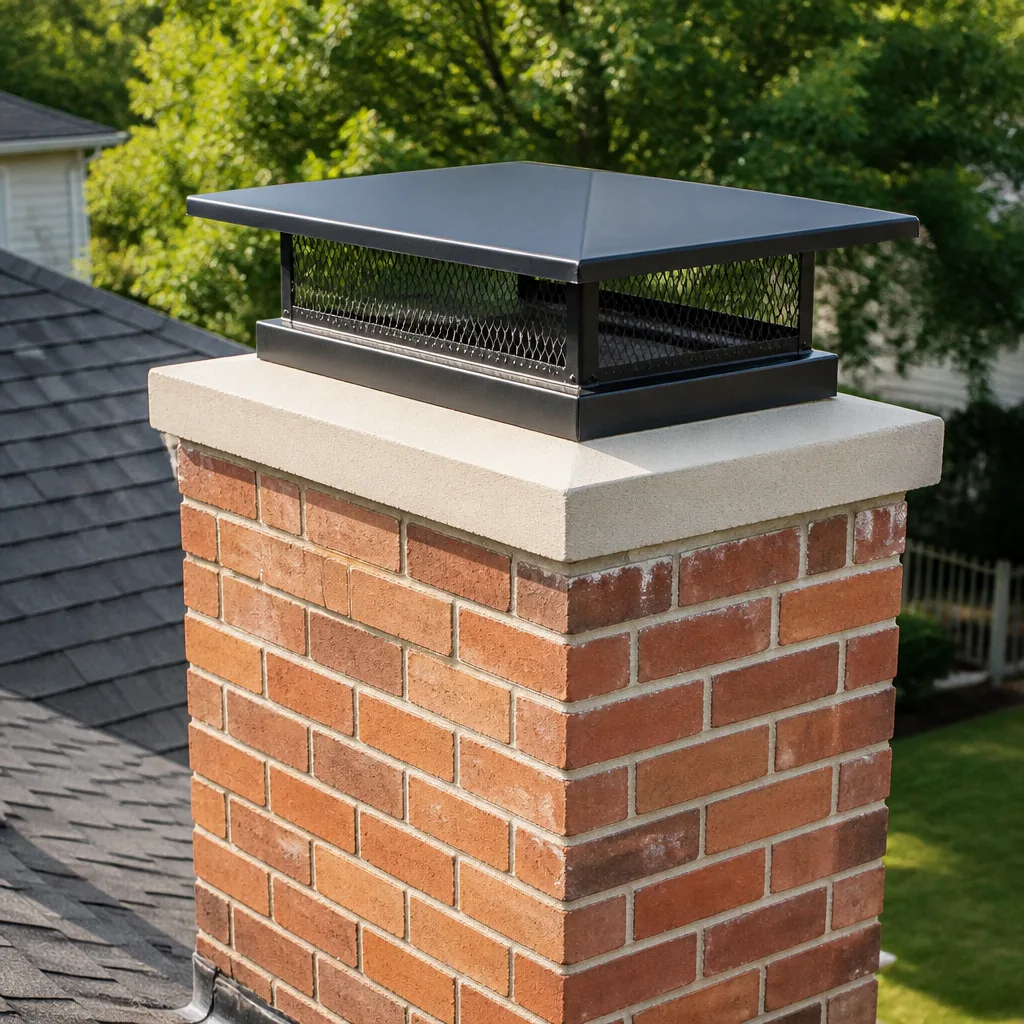 Caps & crowns
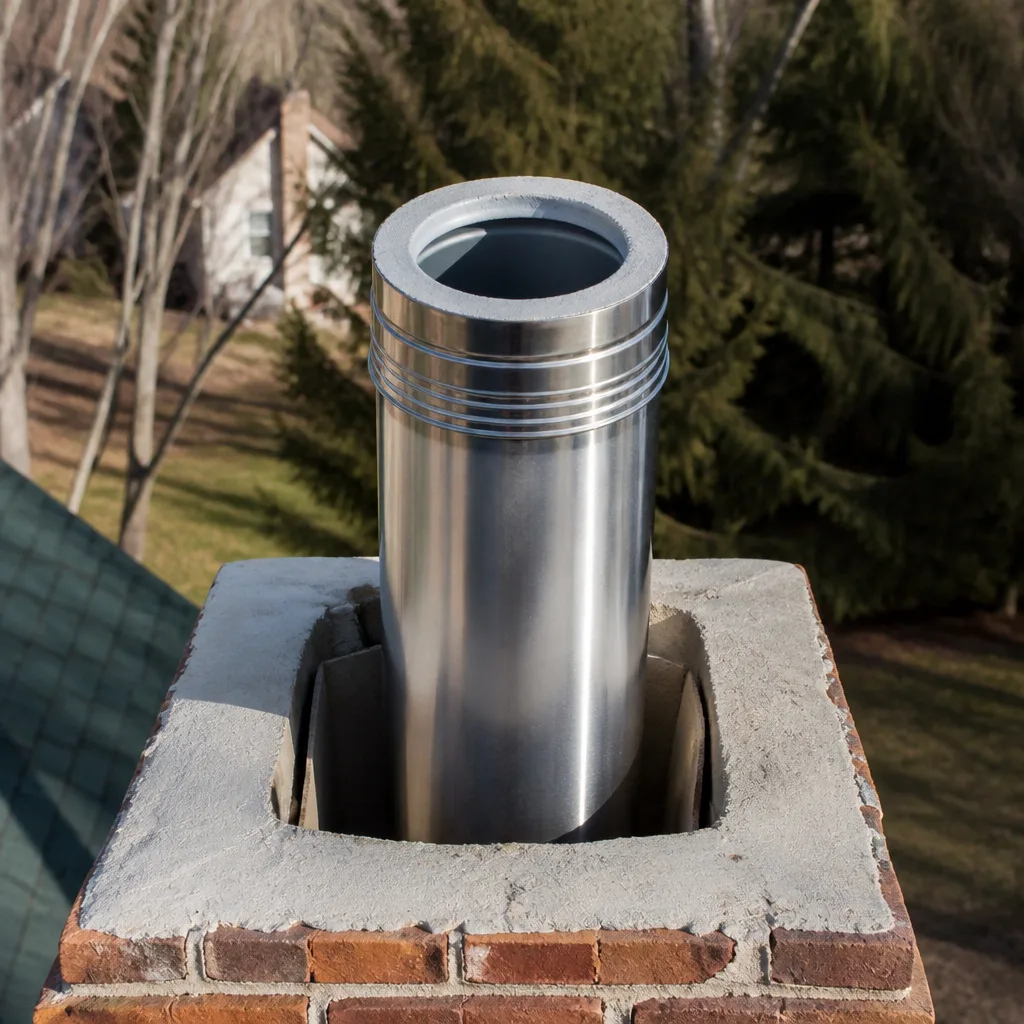 Flue relining
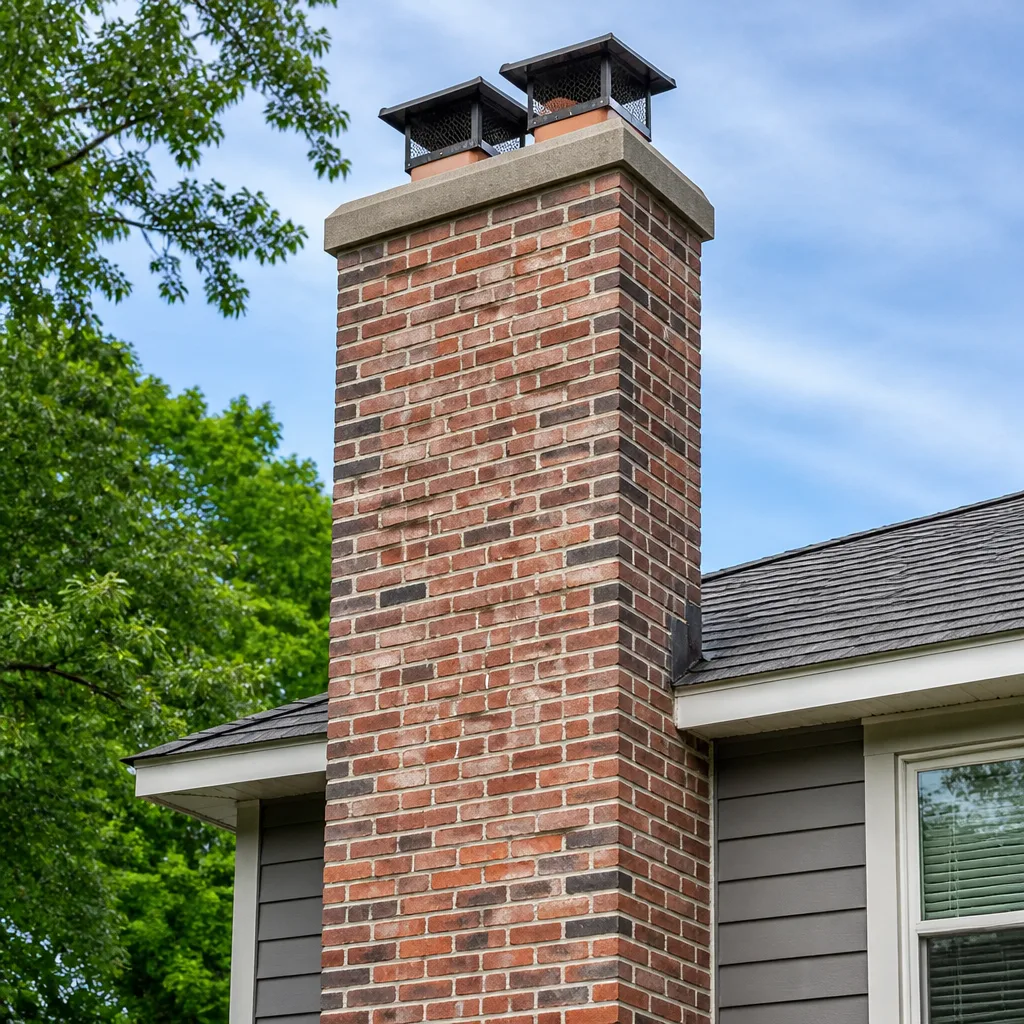 Masonry repair
 Gas fireplace service
Level 1 sweep and inspection to the NFPA 211 annual standard - flue, crown, cap, and flashing checked and photographed
Chimney sweep logs do not sweep chimneys. They loosen some creosote - which then falls where a brush and vacuum still have to collect it.
Chimney Cleaning Emergency Preparedness Guide for Concord Homes
A chimney fire can reach 2,000°F and travel from the flue to the attic framing in under four minutes. And here’s the part that catches people off guard: it often doesn’t look like an emergency. It sounds like a low roar or a crackling that’s louder than usual, and most homeowners mistake it for a strong, healthy fire rather than a flue fire. The fireplace feels contained. It isn’t. In Concord, where fire season is a genuine part of the calendar, we think every household should have a chimney response plan the same way they have an earthquake kit. This guide builds that framework: how to recognize a chimney fire while it’s happening, what to do in the first 60 seconds, why a Level 2 inspection is mandatory afterward, and how to prevent one before the season turns.
Quick Answer
A chimney fire emergency in Concord requires three immediate actions: call 911, get everyone out of the house, and close the damper only if you can do it safely from outside the firebox. After any suspected chimney fire, you cannot use the fireplace again until a Level 2 inspection is completed, which is an NFPA 211 requirement, not a suggestion. Pre-season prevention, especially verifying your cap has proper spark arrestor mesh, is what keeps a contained fire from becoming a structural one.
Styles & brands we work with
- Sweep & inspection
- Caps & crowns
- Flue relining
- Masonry repair
- Gas fireplace service
Table of Contents
- How to Recognize a Chimney Fire While It’s Happening
- The First 60 Seconds: Immediate Response Sequence
- Closing the Damper: Why It’s Debated
- Post-Fire Protocol: The Level 2 Inspection Requirement
- What Concord Fire Department Does and What Documentation You’ll Need
- Pre-Season Prevention for Concord’s Fire Season
- Verifying Your Spark Arrestor Mesh Under California Requirements
- Common Mistakes to Avoid
How to Recognize a Chimney Fire While It’s Happening
The single most dangerous thing about a chimney fire is that it doesn’t announce itself the way a kitchen fire does. There’s no alarm, no visible flame from the fireplace, often no smoke in the room. What you get instead is a set of sensory cues that most people misread as evidence the fire is working well. In our experience responding to Concord homes after the fact, the most common thing we hear is “we thought it was just burning hot.”
Here’s what an active chimney fire actually produces:
- A low roar or rumbling that sounds like a freight train or a distant jet, coming from the chimney rather than the firebox. This is the drafted air feeding combustion inside the flue.
- Loud crackling or popping that’s noticeably sharper and more rhythmic than normal wood popping, often described as sounding like popcorn.
- A hot, acrid smell in the room or upstairs, distinct from normal wood smoke. It can smell like burning creosote or hot metal.
- Dense smoke or visible flames from the top of the chimney. If you can see this from outside, the fire is well established.
- Discolored or warped metal on the damper, the cap, or the fireplace screen. Heat distortion is a reliable sign the flue got far hotter than it should.
- Creosote flakes or pieces of liner on the roof or in the yard after the event, which tell you the flue interior took damage.
Any one of these is enough to treat it as a chimney fire. Two or more and you should assume the worst. The roar is the one people most often miss, because a strong, well-drafted fire also makes noise. The difference is intensity and origin: if the sound is coming from above the firebox, from the flue itself, that’s a flue fire and not a healthy burn.
The First 60 Seconds: Immediate Response Sequence
Decisions made in the first minute matter more than anything that follows. The goal is not to save the fire, the fireplace, or the house’s contents. The goal is to get people out and get the fire department en route while limiting the air feeding the flue. Here’s the sequence we recommend every Concord household rehearse:
- Call 911 first. Before you do anything else. State clearly that you believe you have a chimney fire. The dispatcher will tell you what to do while units are en route.
- Get everyone outside. Not to the front yard as a spectator. To a safe distance from the house, ideally where you can see the chimney top.
- If it can be done safely, close the damper. Only if you can reach the damper handle without opening the firebox doors and without smoke filling the room. If it’s not safely reachable, leave it and get out.
- Close the glass doors on the firebox if they’re open, again only if you can do it quickly and safely from outside the firebox.
- Do not throw water on the fire. A sudden steam expansion inside a hot flue can crack the liner or masonry, and it can drive smoke and heat back into the room.
- Do not spray a garden hose down the chimney from the roof. Same reason, plus the roof access risk.
Once you’re outside and 911 is on the way, stay out. The fire department will handle the rest, and your job shifts to telling them what you observed: when it started, what it sounded like, whether you saw flames or smoke from the top, and how long it’s been burning. That timeline goes into their report and into yours.
Closing the Damper: Why It’s Debated
The damper question is one of the most argued-over points in chimney fire response, and the honest answer is that it depends on how fast you can do it and whether the flue has already been breached. Closing the damper starves the fire of oxygen, which can slow it down and limit how much creosote keeps burning. But there’s a trade-off: if the flue has cracked or the fire has moved into the surrounding framing, closing the damper traps heat and combustion gases inside the structure with nowhere to vent.
So the practical rule is conditional:
- Close it if you can reach the handle without opening the firebox, within a few seconds, and the fire is still confined to the chimney.
- Leave it open if reaching the damper means opening the firebox doors, if you have to lean into smoke, or if you have any reason to think the fire has spread beyond the flue.
- Never prioritize the damper over evacuation. Property can be rebuilt. The order is always people, 911, then property.
We get asked this a lot in Concord, and the answer we give is the same: your safety comes first, and the fire department’s instructions on the phone override any general rule. Also, if your damper is stuck, disconnected, or hard to reach, that’s a chimney repair issue worth fixing before an emergency, not during one. Familiarity with that one handle, practiced in advance, is what makes the difference.
Post-Fire Protocol: The Level 2 Inspection Requirement
After a chimney fire, the fireplace is out of service. Not “probably fine after it cools down.” Out of service until a Level 2 inspection has been completed by a qualified professional. This is set out in NFPA 211, the national standard for chimneys, fireplaces, vents, and solid fuel appliances, and it’s the standard the fire department and your insurer will reference.
Here’s what a Level 2 inspection actually involves and why it’s not the same as a visual check:
- Video scanning of the flue interior. A camera records the full length of the liner so the technician can see cracks, gaps, spalling, and warped sections that a visual inspection from the firebox can’t reach.
- Inspection of connected appliances and their venting, not just the chimney itself.
- Examination of accessible portions of the chimney exterior and interior, including the attic and crawl spaces where the chimney passes through framing.
- Documentation, usually with photos. You want a written report you can hand to your insurer and keep.
Only after that report can anyone tell you three things: whether the flue is safe to use, whether a repair is needed, and what kind of repair. In some cases the liner is cracked and needs a full reline with a flexible stainless system like DuraFlex. In other cases the interior has deteriorated but can be restored with a ceramic resurfacing product such as HeatShield, which seals cracks and rebuilds the flue surface without demolition. That second option only exists when the damage qualifies. You can’t know which you’re dealing with until the camera goes in. Call (833) 434-1221 to schedule that inspection; we answer 24/7.
What Concord Fire Department Does and What Documentation You’ll Need
When Concord Fire Department responds to a chimney fire, the initial priority is confirming the fire is out and the structure is safe. That usually means checking the roof and attic for extension, verifying the flue isn’t still actively burning, and confirming there’s no carbon monoxide buildup in the living space. Once the scene is safe, they’ll clear and you’ll be given what amounts to the start of your paper trail.
What you should expect to gather and keep:
- An incident or run report number. Ask for it directly. This is the reference number your insurer will want.
- The date and time of the fire as recorded by the department, which may differ from when you first noticed it.
- Their observations on visible damage to the chimney, roof, or structure, which will be the basis for any claim.
- Any documentation the department provides related to the cause or conditions. This often becomes part of the claim record.
- Photographs you take yourself, from multiple angles, before cleanup. Both interior and exterior.
The inspect-first, then-recommend approach matters here. When we assess a post-fire chimney in Concord, the written inspection report we produce is designed to work alongside the fire department’s documentation. Insurers want to see the cause and the condition, and they want to see photographic evidence of the flue interior. If someone tells you the flue is cracked without showing you the video, ask for it. You’re entitled to see what the camera saw.
Pre-Season Prevention for Concord’s Fire Season
Chimney fires are almost entirely preventable, and in Concord the prevention window is tied to the calendar. Fire season runs roughly from late spring through fall, and the burning season that follows is when the fireplace comes back into use. The sweep should happen before the fire season and well before the first burn, so that any damaged liner gets fixed while the weather still allows it and the fireplace is ready when the nights cool.
What we recommend Concord homeowners do each year:
- Book a sweep and inspection before fire season. Creosote builds up over a season of burning, and the glazed, third-degree creosote that causes the hottest fires is the hardest to remove. Cleaning it early, while it’s still soft, is easier for the technician and easier on the liner.
- Check your chimney cap. A missing or damaged cap lets water in (which degrades the liner), lets animals nest (which blocks the flue), and lets sparks out onto the roof. Caps from makers like Gelco and Famco are rated for long-term exterior weathering, which is what you want in the sun and heat here.
- Verify the spark arrestor mesh. California requires spark arrestors on chimney outlets to stop hot embers from landing on the roof or nearby vegetation. Mesh size matters: too coarse a mesh lets sparks through, and too fine a mesh clogs with soot. Ask your technician to check it during the sweep.
- Burn dry, seasoned wood. Green or wet wood produces far more creosote. Aim for wood that’s been split and dried, not freshly cut.
- Never burn trash, cardboard, or treated wood. These produce chemicals and creosote that damage liners and raise fire risk.
- Keep the firebox screen or glass doors closed during a burn. Embers and sparks stay contained.
The point of all of this is not a beautiful fireplace. It’s a flue that’s intact, a cap that’s doing its job, and a level of creosote that won’t fuel a 2,000°F chimney fire. That’s the version of prevention that actually matters. The rest is decoration.
Verifying Your Spark Arrestor Mesh Under California Requirements
California requires spark arrestors on chimneys, and the mesh size on your cap is the detail most homeowners never check. The requirement exists for a good reason: in a fire season like Concord’s, a single ember off a chimney onto a dry roof or a nearby tree can start something nobody intended. The cap isn’t decorative. It’s the part that keeps your fire inside your chimney.
What to look at when you’re on the roof or having your technician check:
- Mesh size. The holes need to be small enough to stop embers. The common standard for spark arrestor mesh is around 1/2 inch or smaller depending on the local code and the appliance. Ask your technician to confirm the mesh against the requirement your building department enforces.
- Mesh condition. Rusted-out or torn mesh is the same as no mesh. Replace the cap, not just the screen.
- Clogging. Fine mesh clogs with creosote and soot over time. If the draft has gotten weak or smoke rolls into the room, a clogged cap is a common cause.
- Attachment. The cap has to be secured against wind. A loose cap that blows off is a hole in the top of your chimney, and water and animals get in.
While you’re inspecting the cap, look up at the chimney top from the ground. If the cap is tilted, missing, or obviously rusted through, that’s a repair, not a maybe. Our chimney repair service covers caps, crowns, and flashings, and we install Gelco and Famco components rated for exterior weathering. If you’re not sure what you’re looking at, the sweep visit is the right time to sort it out.
Common Mistakes to Avoid
These are the errors we see most often in Concord, and most of them turn a manageable situation into an expensive one:
- Mistaking the roar for a good fire. A strong draft and a healthy fire do make noise, but a low, continuous roar from the flue is a chimney fire. If you’re ever unsure, treat it as one and call 911.
- Using the fireplace again after a fire without a Level 2 inspection. A fire can crack a liner invisibly, and the next burn drives carbon monoxide and heat into the framing. The inspection isn’t optional under NFPA 211.
- Accepting a repair quote you can’t verify. If a sweep tells you the liner is shot and doesn’t show you the camera footage, ask for it. You should see the evidence, not just hear about it.
- Skipping the sweep during a dry year. Low snowpack and a hot summer don’t make the chimney safer. They make a spark on the roof more dangerous. In Concord, the dry season is exactly when creosote and roof debris matter most.
- Burning wet or unseasoned wood to save money. The extra creosote it deposits is the fuel a chimney fire feeds on. Dry wood burns cleaner and keeps the flue in better condition.
- Leaving a rusty cap on the chimney top. Water intrusion through a failed cap is one of the most common causes of liner deterioration. The cap is the cheapest part of the system to replace and the easiest to neglect.
- Hiring the lowest sweep bid and then getting an upsell list. A low sweep price is sometimes just the cost of an inspection that ends in a sales pitch. Look for a company that inspects first, shows you the evidence, and can do the repair itself with professional-grade materials, not a crew that hands you off to a separate contractor.
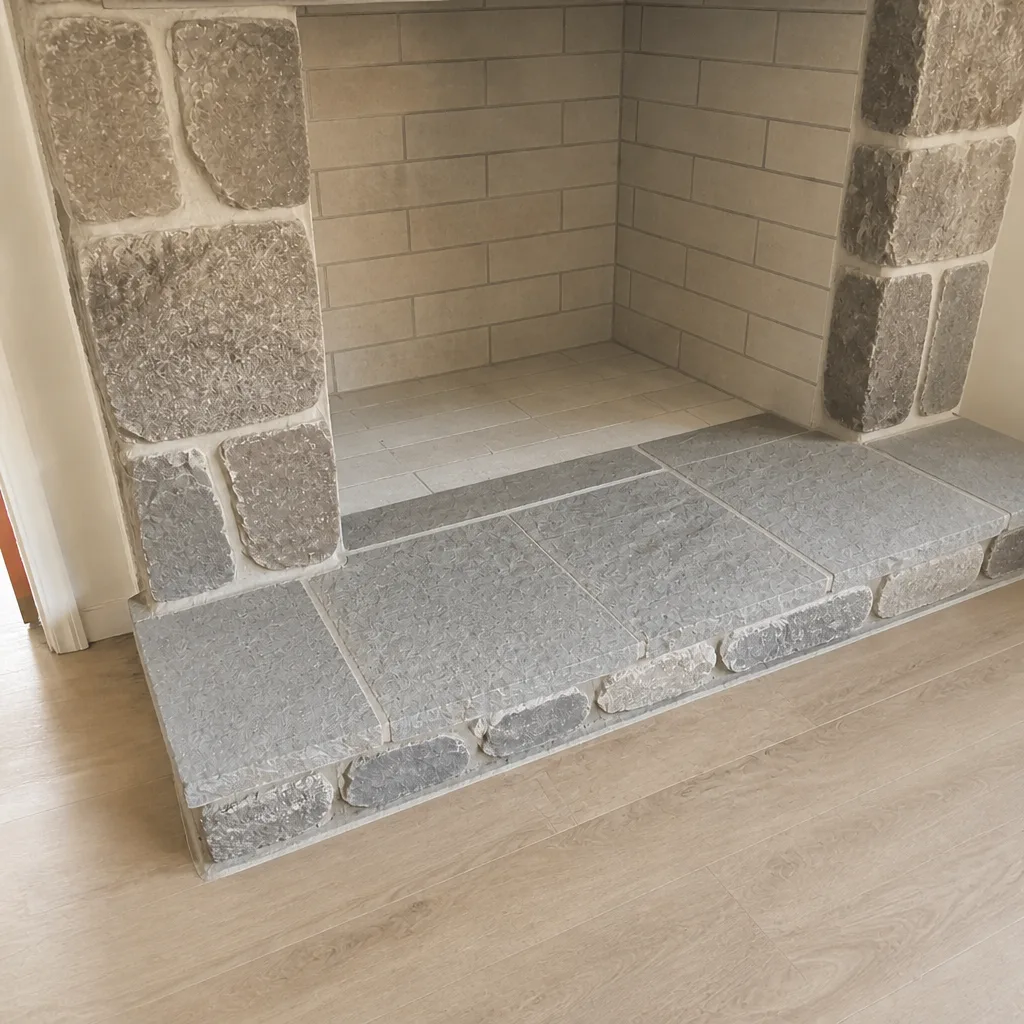
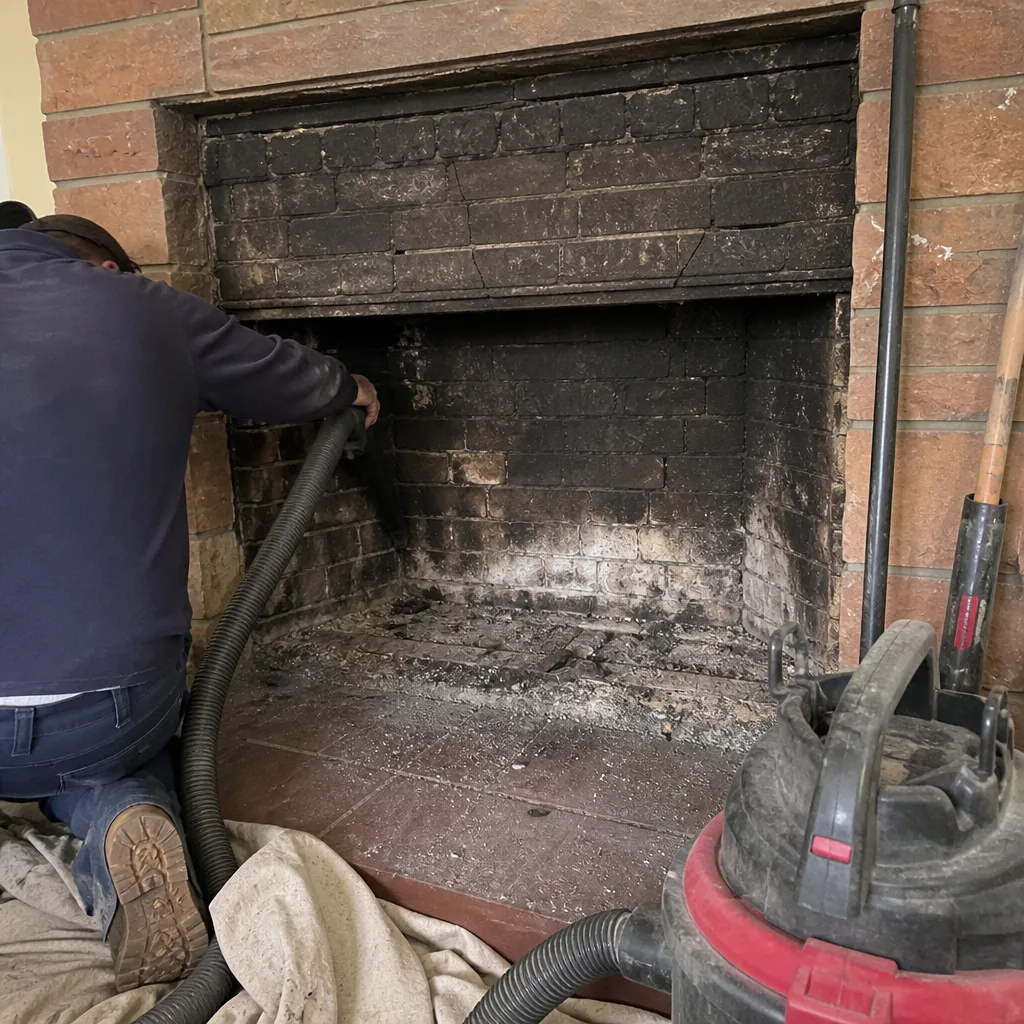
See the difference
 Before
 After
 Before
 After
 Before
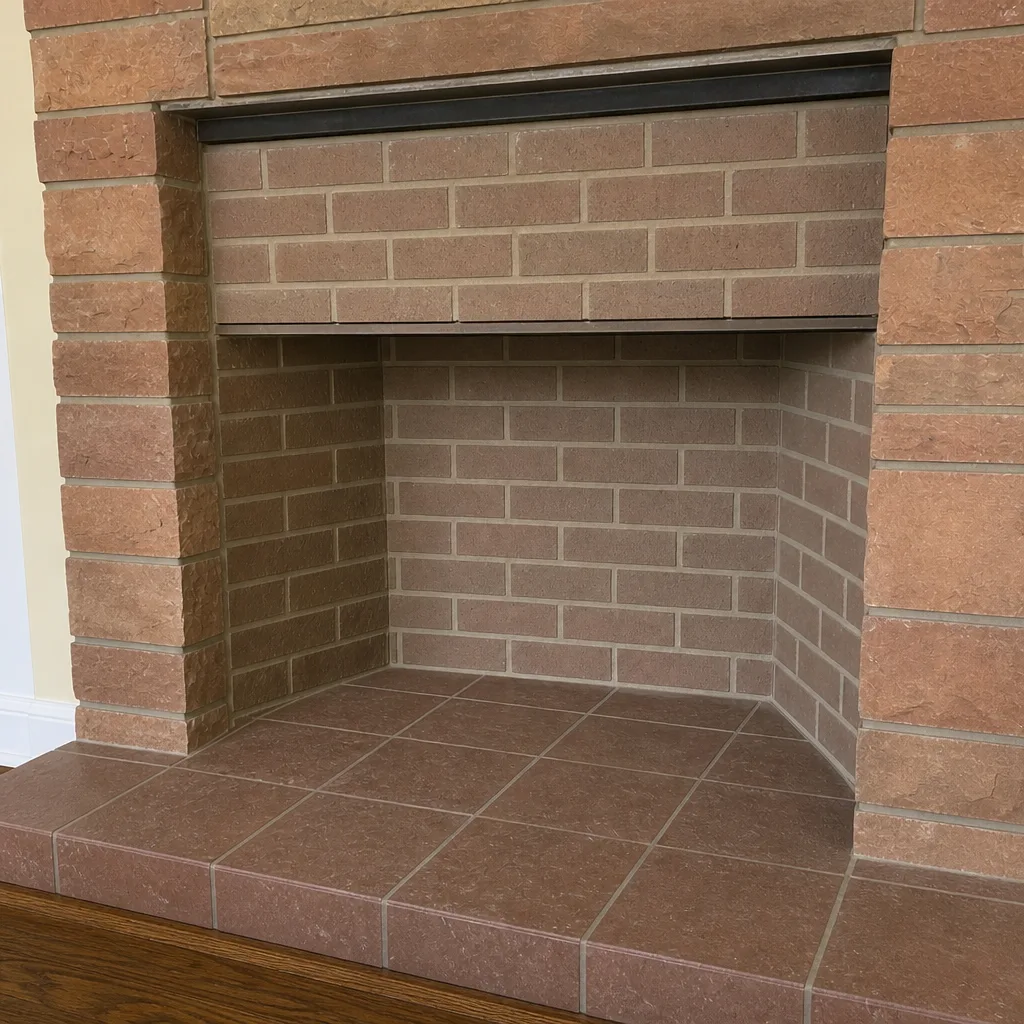 After
When to Call a Professional
Call a professional if you’ve had a suspected chimney fire, if you see cracked or missing liner material, if your cap is damaged or your spark arrestor mesh is rusted through, or if it’s been a season or more since your last sweep. Also call if you smell smoke in the house when the fireplace shouldn’t be producing any, if the draft is noticeably weaker, or if you see creosote staining on the exterior brick. Any of these can wait a few days, but they shouldn’t wait a season. The exception is an active chimney fire, which is a 911 call, not a service call. Stallion Chimney Sweep offers free estimates in Concord and handles inspection, sweeping, and repair with one crew so there’s no hand-off. Call (833) 434-1221. We answer 24/7, and dispatch runs 7am to 7pm, Sunday through Friday.
Frequently Asked Questions
A chimney sweep in Concord typically runs a standard flat range, and the price is set per job by a written estimate so you know the total before anyone starts. Our technicians have up to experience, and the estimate is free. Call (833) 434-1221 for an exact quote.
The most reliable signs are a low roar or rumbling from the flue, loud popping that sounds like popcorn, a hot acrid smell in the room, and discolored or warped metal on the damper or cap. Creosote flakes on the roof after the event are confirmation. If you suspect one, treat it as a chimney fire and call 911; then book a Level 2 inspection before using the fireplace again.
Yes. NFPA 211 requires a Level 2 inspection after a chimney fire before the appliance can be returned to service. It’s not an upsell or a sales tactic, it’s the standard the fire department and your insurer will reference, and it’s how you find out whether the flue is safe. Call (833) 434-1221 to schedule one.
Most wood-burning fireplaces should be swept annually, and we recommend doing it before fire season so any damage gets fixed while the weather allows. If you burn frequently or burn a lot of softwood, you may need it more often. Annual is the floor, not the ceiling.
Creosote builds up, and glazed creosote is the fuel a chimney fire burns. The risk isn’t just the fire itself; it’s that a small flue crack goes unnoticed until the next burn pushes carbon monoxide into the house. The sweep is the cheap version of the problem. Call (833) 434-1221 for a free estimate and we’ll tell you what we find.
Not automatically. The fire department produces an incident report and you gather the documentation yourself, and whether you file a claim is your decision. What matters is that you keep the report, the photos, and the Level 2 inspection findings, because that’s the paper trail your insurer will ask for if you do file.
The Bottom Line
A chimney fire is a contained-system emergency that behaves like an uncontrolled one, and the difference between a manageable event and a structural loss is usually decided in the first minute. Recognize the roar. Call 911. Get people out. Close the damper only if it’s safe. And after any fire, the fireplace stays out of service until a Level 2 inspection is done and documented. Prevention is the other half: sweep before fire season, check the cap and the spark arrestor mesh, and burn dry wood. That’s the entire framework, and it’s worth rehearsing before you need it.
If you’re in Concord and you want a straight answer on your chimney’s condition, we’ll show you the camera footage and tell you what we found. Stallion Chimney Sweep handles inspection, sweeping, and repair with one crew, using professional-grade materials from Olympia Chimney and Copperfield, and we install DuraFlex liner systems and HeatShield ceramic repair when the damage calls for it. Call (833) 434-1221 for a free estimate. We answer 24/7. Fast dispatch, 7am-7pm, Sunday through Friday.
If you need a routine visit rather than an emergency, start with a chimney sweep in Concord and let the inspection tell you what else, if anything, the chimney needs. You can learn more about how we work at Stallion Chimney Sweep and find our full local information at Concord.
Written by the team at Stallion Chimney Sweep.