
Last updated November 15, 2026
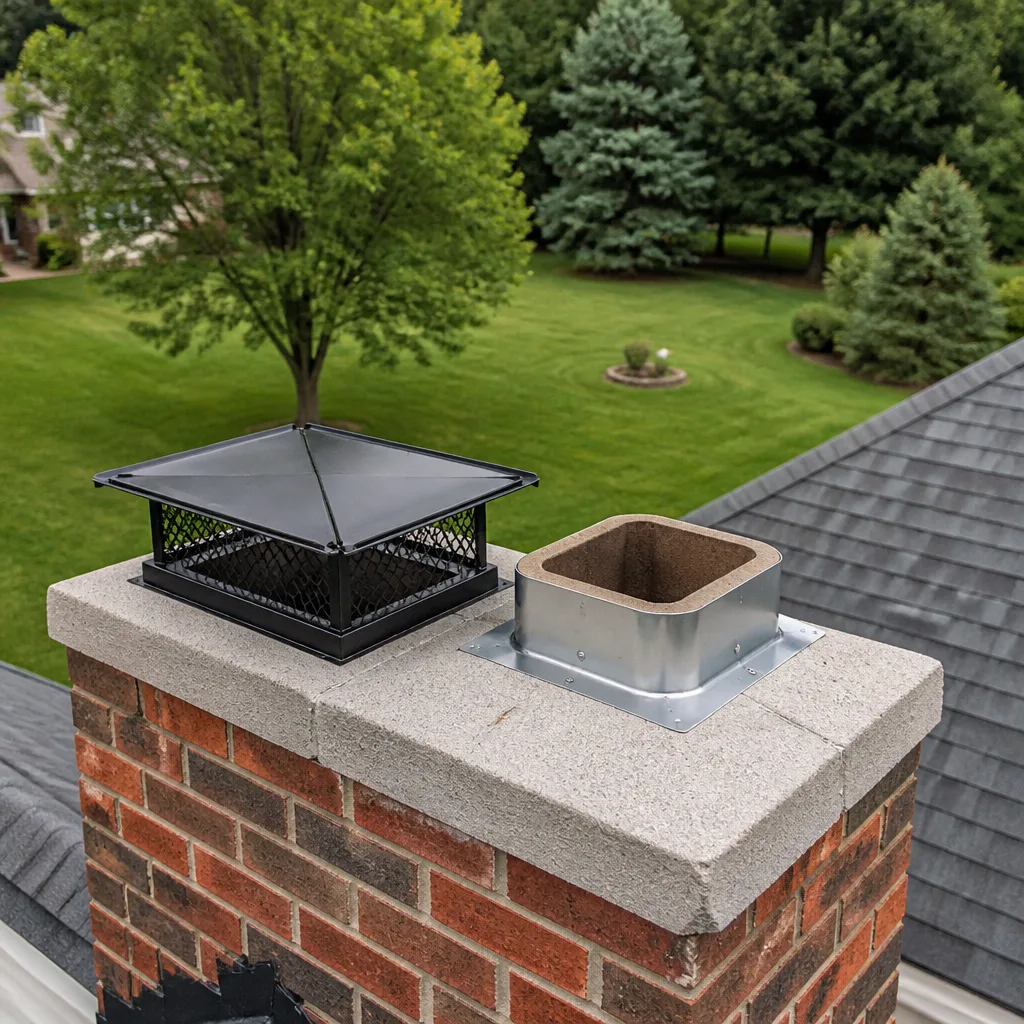 Sweep & inspection
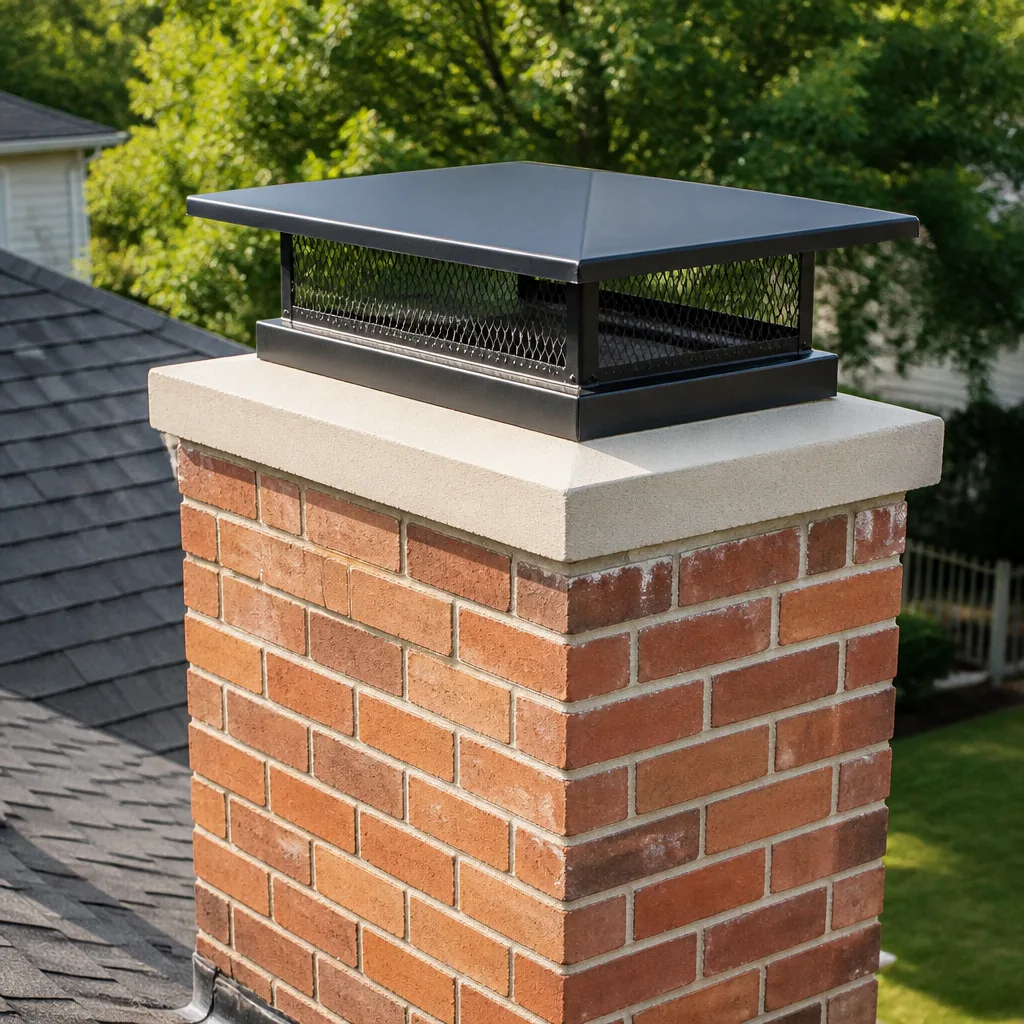 Caps & crowns
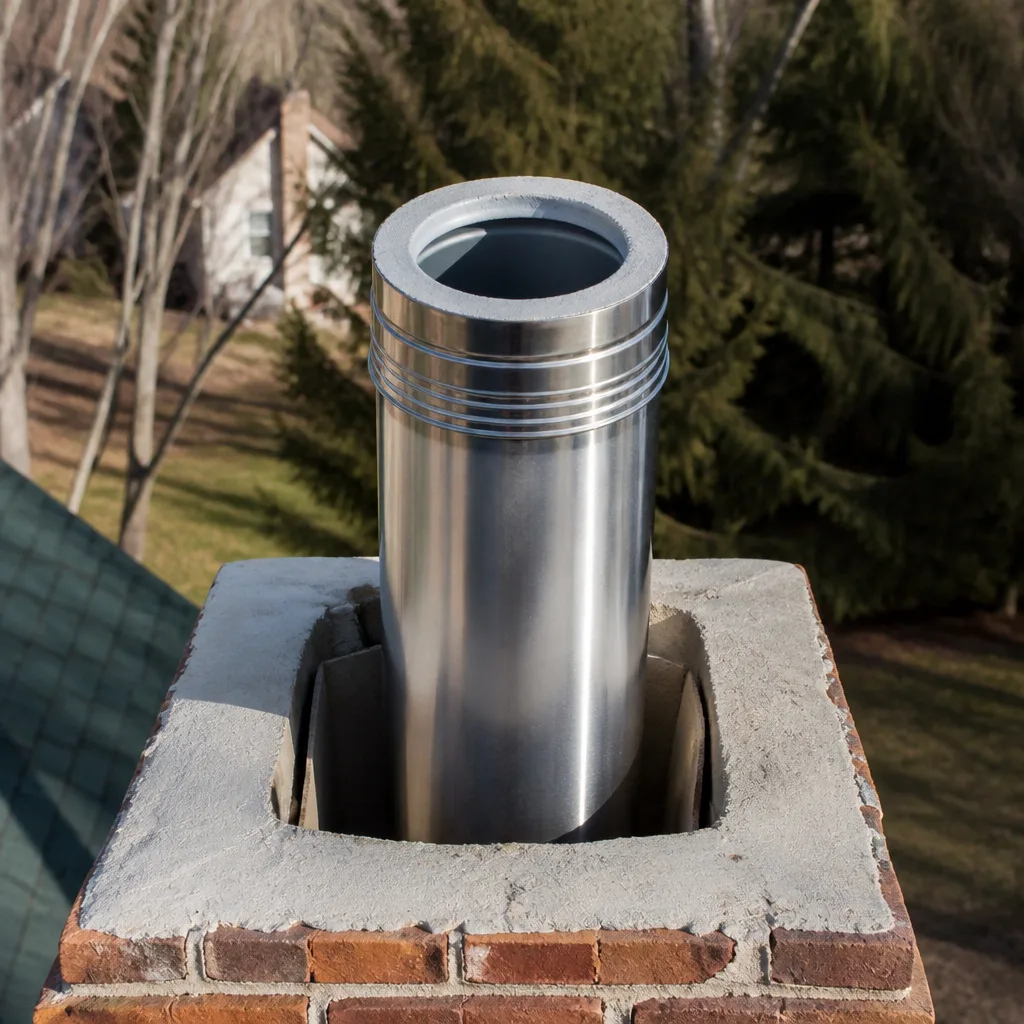 Flue relining
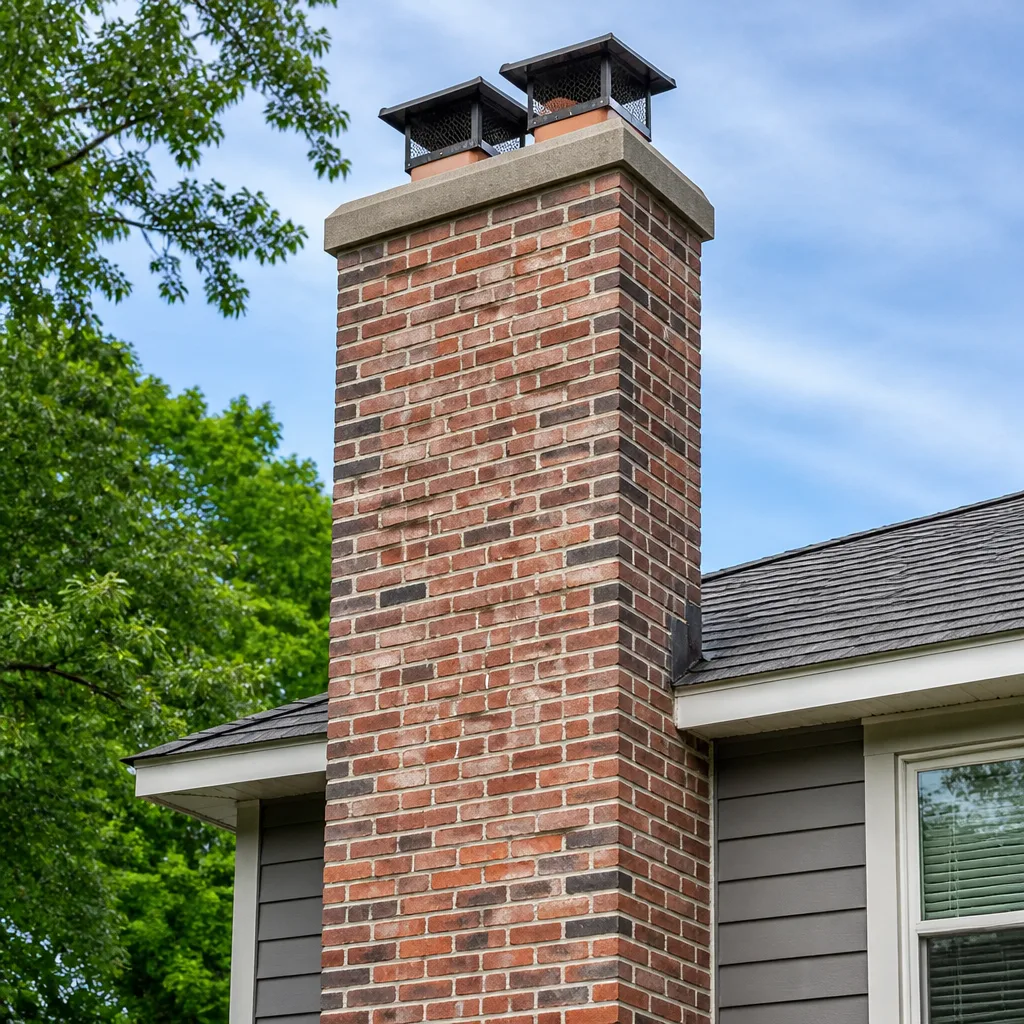 Masonry repair
 Gas fireplace service
Level 1 sweep and inspection to the NFPA 211 annual standard - flue, crown, cap, and flashing checked and photographed
Chimney sweep logs do not sweep chimneys. They loosen some creosote - which then falls where a brush and vacuum still have to collect it.
DIY vs Professional Chimney Cleaning: The Concord Homeowner’s Decision Guide
Most homeowners think the chimney cleaning question is about money. Sixty dollars for a brush kit versus a service call, and the math seems obvious. But the math is wrong, because the two things aren’t the same job. A hardware-store brush can’t reach what a rotary system reaches, can’t remove what a rotary system removes, and can’t show you what a camera shows you. This guide maps exactly where the DIY line sits for a Concord homeowner, what you can legitimately handle yourself, and what happens to your flue when you guess wrong.
Quick Answer
You can safely maintain the firebox, damper, and exterior cap view yourself, but a full flue cleaning is professional work because creosote above Stage 1 requires rotary equipment and camera verification that DIY kits don’t provide. A standard brush kit also cannot remove glazed or tar-like Stage 2 creosote, and trying can spread it and make professional treatment harder. In Concord, get a professional sweep before each burning season and handle the small upkeep tasks between visits yourself.
Styles & brands we work with
- Sweep & inspection
- Caps & crowns
- Flue relining
- Masonry repair
- Gas fireplace service
Table of Contents
- What a Concord homeowner can safely do between professional sweeps
- Understanding creosote stages and why brushes fail at Stage 2
- Why rotary cleaning systems are required for heavy creosote
- Tool quality reality: what hardware stores don’t stock
- The liability and insurance gap in California
- The one legitimate DIY case: pellet stove exhaust upkeep
- Cost comparison: what DIY actually costs versus a professional sweep
- Common mistakes to avoid
- When to call a professional
What a Concord Homeowner Can Safely Do Between Professional Sweeps
There’s a real list of tasks a homeowner can handle without professional equipment, and it’s worth knowing so you don’t overpay for things you could do yourself. The key is staying inside the firebox, the damper, and the outside of the chimney. The moment a task requires reaching into the flue, running a tool up the chimney, or reading creosote conditions you can’t see from below, it crosses the line.
Here’s what’s safely in your column:
- Firebox ash removal. After the fire is fully out and the ash has cooled, scoop ash into a metal container with a lid. A shallow ash bed helps the next fire start, but a deep one chokes airflow and can damage the grate.
- Visual damper check. Open and close the damper by hand and confirm the plate moves freely and seats flush. A damper that sticks open wastes heat; one stuck closed sends smoke into the room.
- Exterior cap inspection from the ground. With binoculars or a phone camera zoomed in, look at the cap from the yard. Missing cap screws, rust, or a damaged screen are visible at ground level and worth a call if you see them.
- Firebox masonry check. Look for loose mortar joints or cracked firebrick on the inside of the firebox. Note anything that seems off and mention it at your next sweep.
- Chimney exterior view. From the yard, look for missing caps, staining, or anything that seems different from last season. Add it to your list for the next visit.
What you can’t do safely from inside the house: judge the condition of the flue liner, measure creosote thickness up the chimney, inspect the smoke chamber, or verify that the flue is clear all the way to the top. Those require a light, a camera, and a person who knows what to look for. In our experience in Concord, a homeowner who does the small tasks between visits gets a more useful sweep because the firebox is clear and the technician can focus on the flue.
If you want the full cleaning done right, our chimney sweep service includes a camera inspection and a photo report so you see what we see.
Understanding Creosote Stages and Why Brushes Fail at Stage 2
Creosote is the residue of incomplete combustion, and it builds up in three distinct forms. Stage 1 is sooty and flaky – a standard brush removes it cleanly. Stage 2 is hard, shiny, and glassy, sometimes with a tar-like surface. Stage 3 is a thick, glazed coat that has essentially fused to the liner. If a previous sweep told you your chimney has “glazed” or “shiny” buildup, you have Stage 2 or worse.
This is where the DIY brush argument breaks down. A stiff chimney brush is designed to scrape soft soot. Against Stage 2 creosote it does two things: it skips over the hardest deposits entirely, and it can smear the surface, which pushes the tarry material into a thinner, harder layer. Removing that layer afterward requires chemical treatment, more aggressive rotary tooling, or in severe cases liner replacement. A homeowner who brushes a Stage 2 flue doesn’t just fail to clean it – they make the professional job harder.
How do you know if you have Stage 2? You usually can’t, from the firebox. The signal is: shiny black surface inside the flue visible with a light, tar-like smell persistent even when the fireplace is cold, or a report from a previous sweep. In Concord’s mild climate, fires are typically burned less frequently than in colder regions, which can mean more idle months and more time for creosote to cure into a hard layer between seasons. If you’ve had a sweep report Stage 2 buildup, treat DIY brushing as off the table.
Need a proper assessment? Our chimney repair team handles creosote removal and the liner work that often follows.
Why Rotary Cleaning Systems Are Required for Heavy Creosote
A rotary cleaning system is not a step up from a brush – it’s a different tool for a different problem. A standard brush does work by friction as the rod pushes against the flue wall. A rotary system uses a spinning cutting head on a flexible rod to mechanically remove hardened deposits, and it’s what professional sweeps reach for when a brush isn’t enough.
Here’s the practical difference:
- Coverage. A rotary head spins against the full circumference of the flue, including the smoke chamber and offset sections where a straight brush skips.
- Cutting power. Rotary cutting heads remove glazed creosote; brushes deflect off of it.
- Connected equipment. Professional rotary work is paired with a high-volume HEPA vacuum that captures airborne soot at the source. This is not a shop vac, and it’s not something a hardware store sells.
- Controlled through a camera. A technician watches the flue on a camera as the head clears it, verifying that every section is clean before packing up.
The reason this matters in Concord specifically: houses here often have older masonry chimneys that have seen many seasons. We find that a lightweight brush run from a hardware kit starts fine in a clean flue and fails fast in a dirty one. By the second floor of the flue, the rod is dragging, the head isn’t contacting the wall, and the job is effectively over. Rotary tools keep working all the way up.
Tool Quality Reality: What Hardware Stores Don’t Stock
A hardware-store chimney brush kit is built to a price, and the gap between it and professional gear is bigger than it looks. Professional sweeps buy through trade suppliers like Olympia Chimney and Copperfield, and the difference shows up in the materials. The rods are stiffer fiberglass that don’t flex out of contact with the flue wall. The brushes are sized to the actual flue dimension, not a general-purpose fit. The vacuum is a high-volume HEPA unit that holds pressure instead of leaking soot into the room.
What you’re actually getting from a consumer kit:
- Polypropylene rods that bend and snap under load
- A brush in one or two sizes that rarely matches your flue
- A lightweight bag or shop vac that won’t capture fine soot
- No camera, no light rated for inspection, no method to verify the result
The trade-off is invisible at purchase. The brush kit looks fine in the box. It’s only when you’re twenty minutes into a real cleaning that the rod loses contact, the soot drifts into the room, and you realize you can’t tell whether the flue is clean or not. Even something as simple as the cap matters here. We install Gelco and Famco chimney caps rated for long-term exterior weathering because the hardware-store versions often corrode or loosen within a few years.
Professional-grade materials, not hardware-store substitutes. That’s the standard we hold to on every job, and it’s what the difference looks like in practice.
The Liability and Insurance Gap in California
This is the section most DIY guides skip, and it’s the one that matters most. If you clean your own chimney and a chimney fire follows, your California homeowner’s insurer will look at the cause. Most standard homeowner policies exclude damage caused by inadequate maintenance or faulty work. A fire traced to a neglected flue or improper cleaning can lead to a claim dispute that costs far more than the sweep would have.
That’s not scare language. It’s the actual structure of a typical policy: maintenance responsibility sits with the homeowner. The insurance covers sudden and accidental damage, not the slow accumulation of creosote you didn’t remove. If you can’t show that the chimney was professionally cleaned and inspected, a claims adjuster has an easier case to deny or reduce coverage.
The other side of the gap: if you hire a professional and their work leads to a problem, a licensed and insured company carries responsibility for the work. That’s not a guarantee against every failure, but it’s a layer of protection a DIY kit can’t provide. If a professional sweep damages a liner or leaves a flue connection loose, that’s on them. If you damage it yourself, that’s a repair you’re funding out of pocket.
In Concord, we’ve seen enough of these cases to say plainly: documenting annual professional cleaning is one of the cheapest forms of insurance protection a wood-burning homeowner can buy. Not because fires are common, but because after one, the paper trail matters.
The One Legitimate DIY Case: Pellet Stove Exhaust Upkeep
There’s one narrow DIY use case worth flagging: maintaining a pellet stove’s exhaust pipe between annual professional cleanings. A pellet stove burns much cleaner than a fireplace, produces little creosote, and its exhaust vent is accessible at the appliance with modest tools. That’s why a homeowner can handle the between-visits task without the same risk.
Here’s what that looks like, and it’s a version of the same list a professional would follow:
- Wait until the stove is fully off and cool to the touch – at least several hours after the last burn.
- Remove the exhaust venting at the appliance connection, per the manufacturer’s manual instructions.
- Brush out the vent pipe with a flue brush sized to the diameter, collecting residue in a metal container.
- Clean the stove’s ash traps, the burn pot, and the combustion blower per the manual.
- Reassemble the venting with a proper seal and confirm the appliance re-lights normally.
Where it stops: the vertical rise of the venting, the cap, and anything past the appliance’s own termination need a professional inspection. A pellet stove vent can still clog at the cap or in an elbow, and the signs – smoke smell, weak flame, hard starting – need a camera check, not a guess. Annual professional cleaning is still the baseline. The between-visits DIY task is upkeep, not a substitute.
Cost Comparison: What DIY Actually Costs Versus a Professional Sweep
Typical chimney sweep pricing in the Concord area runs from about $180 to $340 for a standard cleaning, with the exact price set by the written estimate before any work begins. That includes the sweep, a camera inspection, and a photo report in our case. A DIY brush kit runs $50 to $80 at a hardware store, and a shop vac runs another $60 or more. Line those up honestly, and the DIY math collapses.
- Professional sweep in Concord: typical $180 – $340, includes cleaning, inspection, and written findings
- Rotary creosote removal (when needed): quoted per job after inspection on the estimate
- DIY brush kit: $50 – $80, plus $60+ for a shop vac
- DIY outcome if creosote is Stage 2: kit is money spent with the problem unchanged
- Liner cleaning and repair after a skipped season: quoted after inspection, always more than a sweep
The cost question isn’t whether DIY is cheaper up front. It’s whether DIY solves the problem. In our experience in Concord, the brush kit gets used once, the homeowner realizes the flue didn’t come clean, and the sweep gets booked anyway. The professional cleaning was always going to happen. The $130 spent on the kit is the actual cost of the DIY attempt.
If you’re weighing the call: free estimates on all chimney work, and the estimate sets the price before anything starts. Call Stallion Chimney Sweep at (833) 434-1221 to book a visit.
Common Mistakes to Avoid
- Brushing a Stage 2 flue. A stiff brush smears glazed creosote instead of removing it, and makes the eventual rotary job harder. If a past sweep reported shiny or tar-like buildup, stop here and call a professional.
- Using a shop vac inside the firebox. Standard shop vacs leak fine soot into the air, and the dust settles through the whole room. Professional sweeps use a sealed HEPA unit for exactly this reason.
- Assuming a clean firebox means a clean flue. The most destructive creosote sits high in the flue, where your light doesn’t reach. Firebox cleanliness says nothing about what’s above the damper.
- Skipping the cap inspection from the ground. Missing cap screws and torn screens let water and animals in. A zoomed phone photo from the yard is a two-minute check worth doing every spring.
- Burning softwood green wood in a Concord fireplace. Wet or green wood produces far more creosote than dry, seasoned hardwood. The moisture goes straight up the flue and settles as tar.
- Treating a pellet stove exhaust vent as a substitute for the annual cleaning. Between-visit upkeep is fine, but the vertical run and cap still need a professional camera check every year.
- Putting off the sweep until symptoms appear. Smoke in the room or a weak draft means the problem has already started. A pre-season sweep in Concord catches these before the burn season begins.
When to Call a Professional
Any of these situations needs a real inspection, not a brush run:
- You’ve had a previous sweep report glazed, shiny, or tar-like creosote
- You’ve burned wet wood, unseasoned wood, or household waste in the fireplace
- You notice smoke in the room, a weak draft, or a persistent tar smell when the fireplace is cold
- You haven’t had a professional cleaning and inspection in over a year
- You’re moving into a home with an unknown chimney history
- A pellet stove is hard to start, back-smokes, or smells like exhaust
In our experience, most homeowners wait until symptoms surface. A pre-season appointment in Concord is cheaper and faster than a mid-season repair. Stallion Chimney Sweep offers free estimates in Concord – call (833) 434-1221 and we’ll book a visit. We answer 24/7, with fast dispatch from 7am to 7pm, Sunday through Friday.
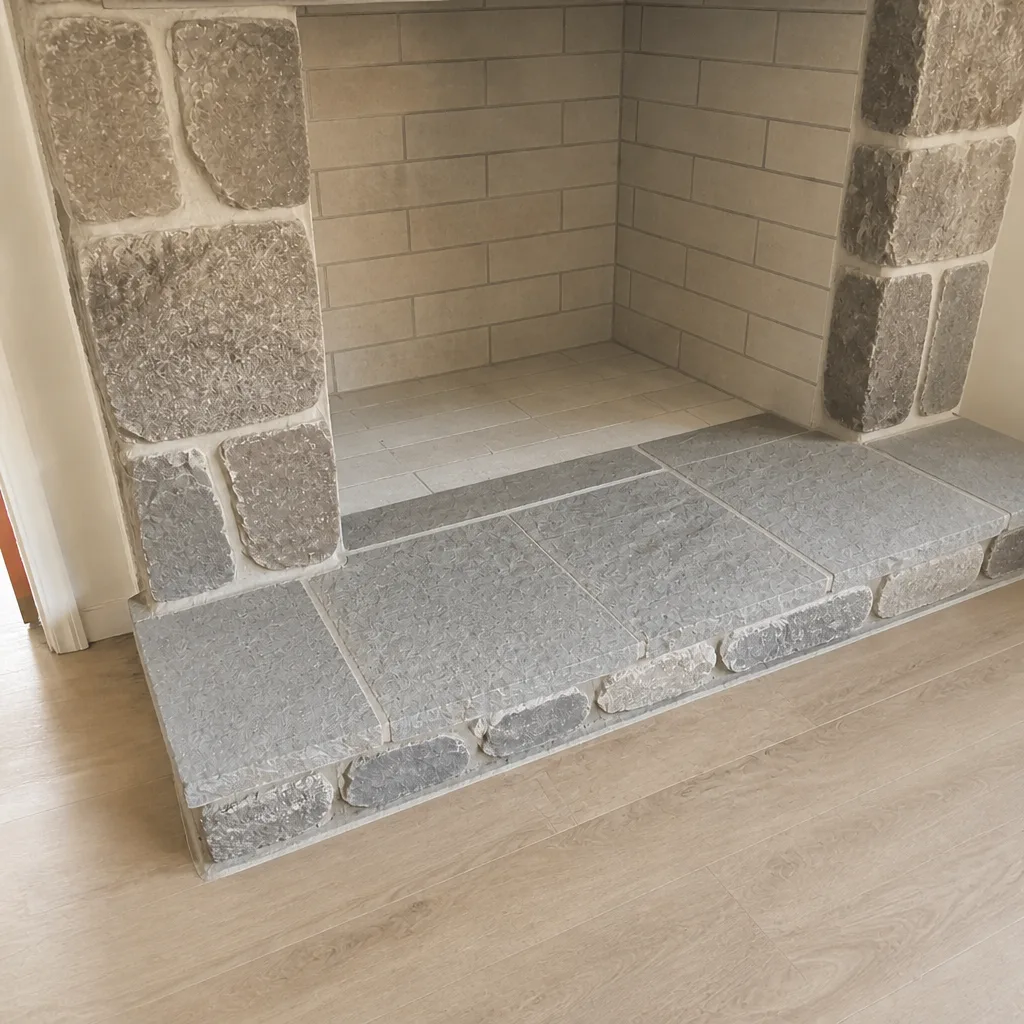
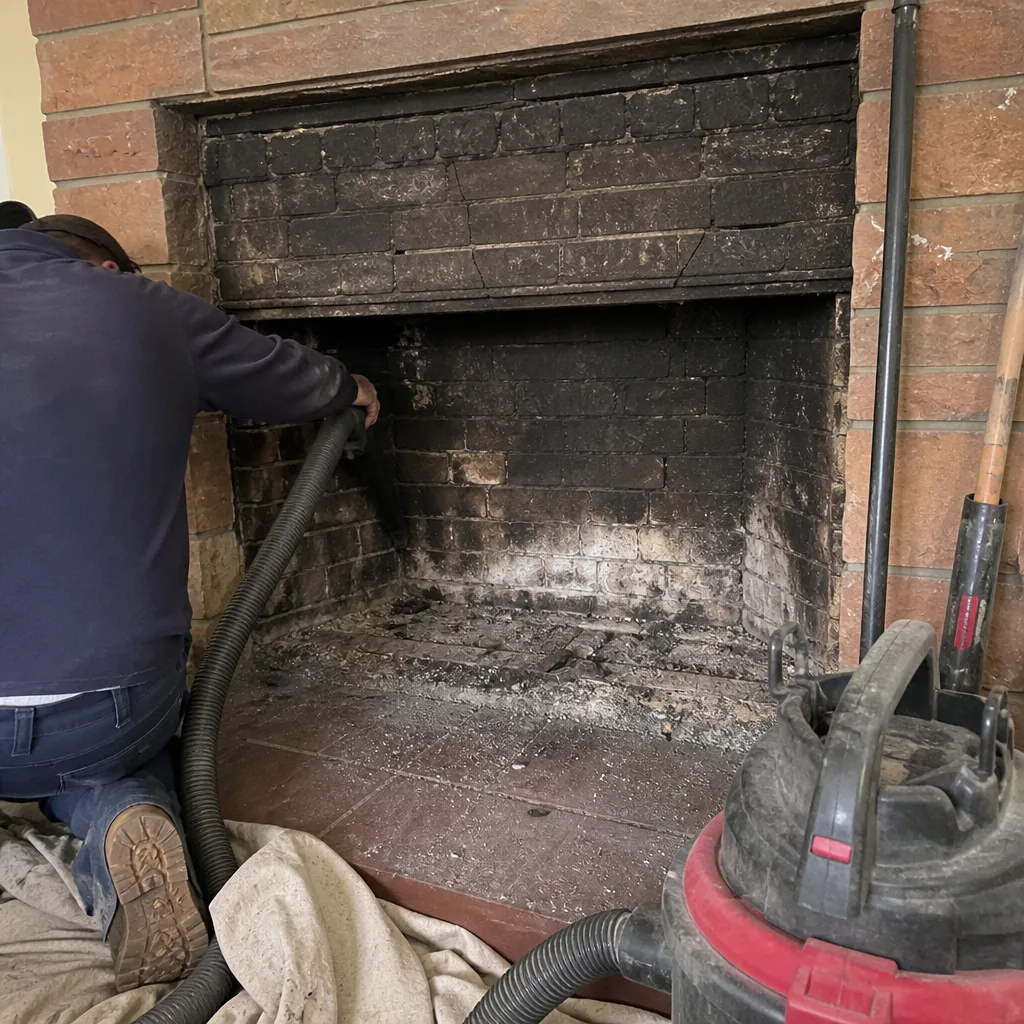
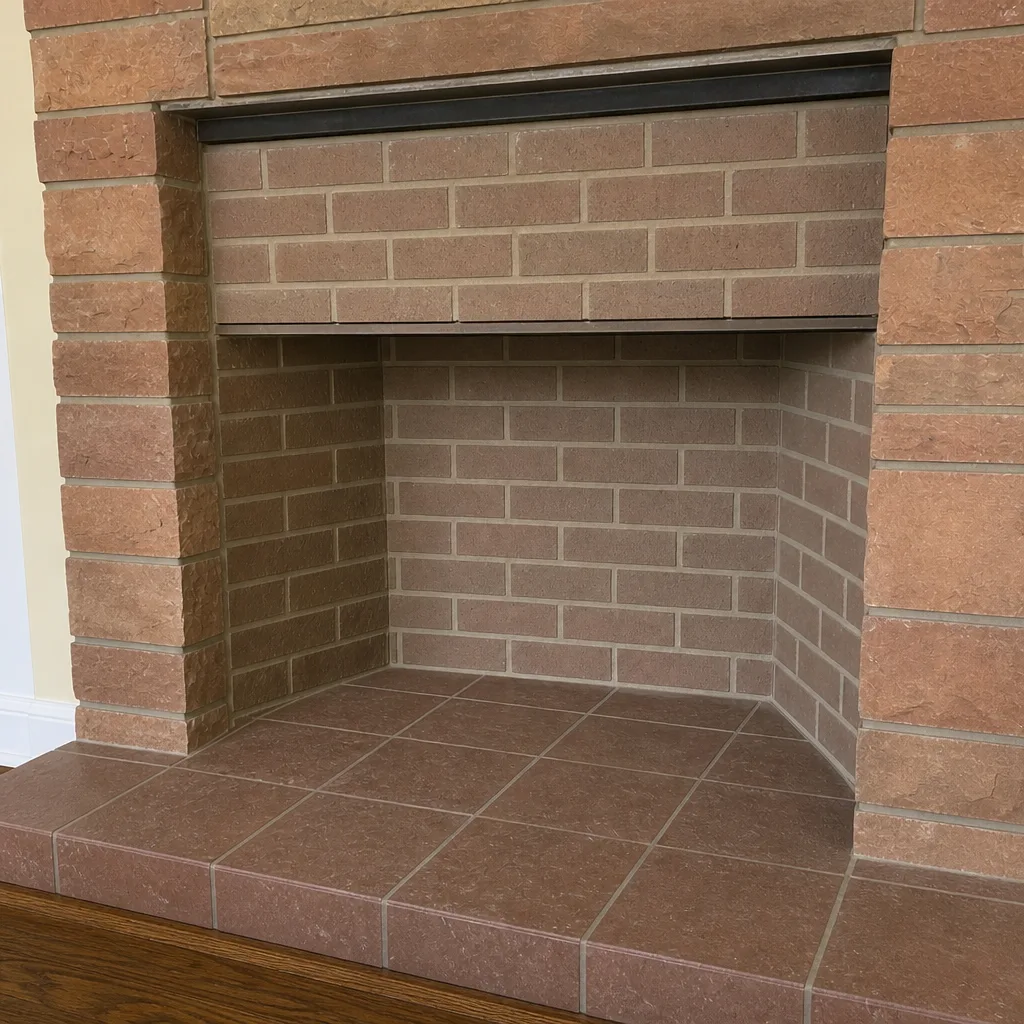
See the difference
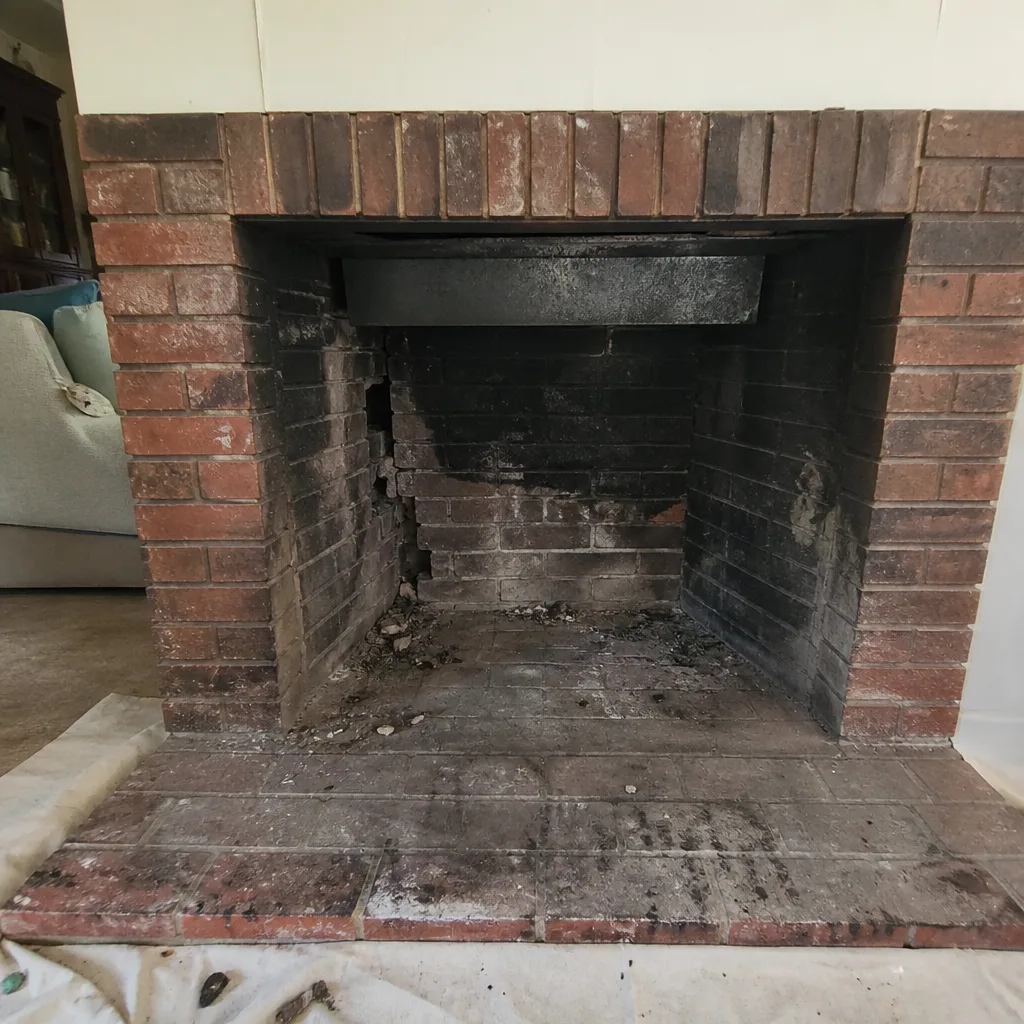 Before
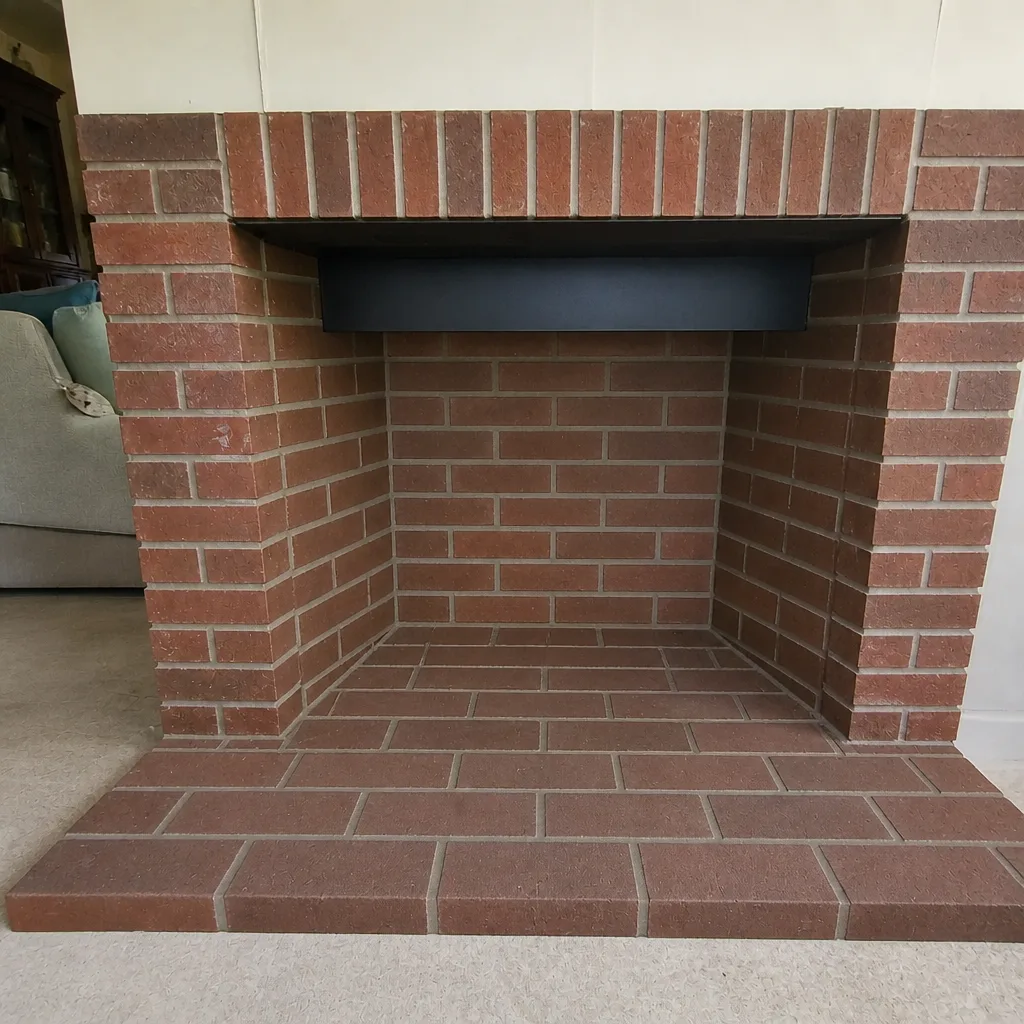 After
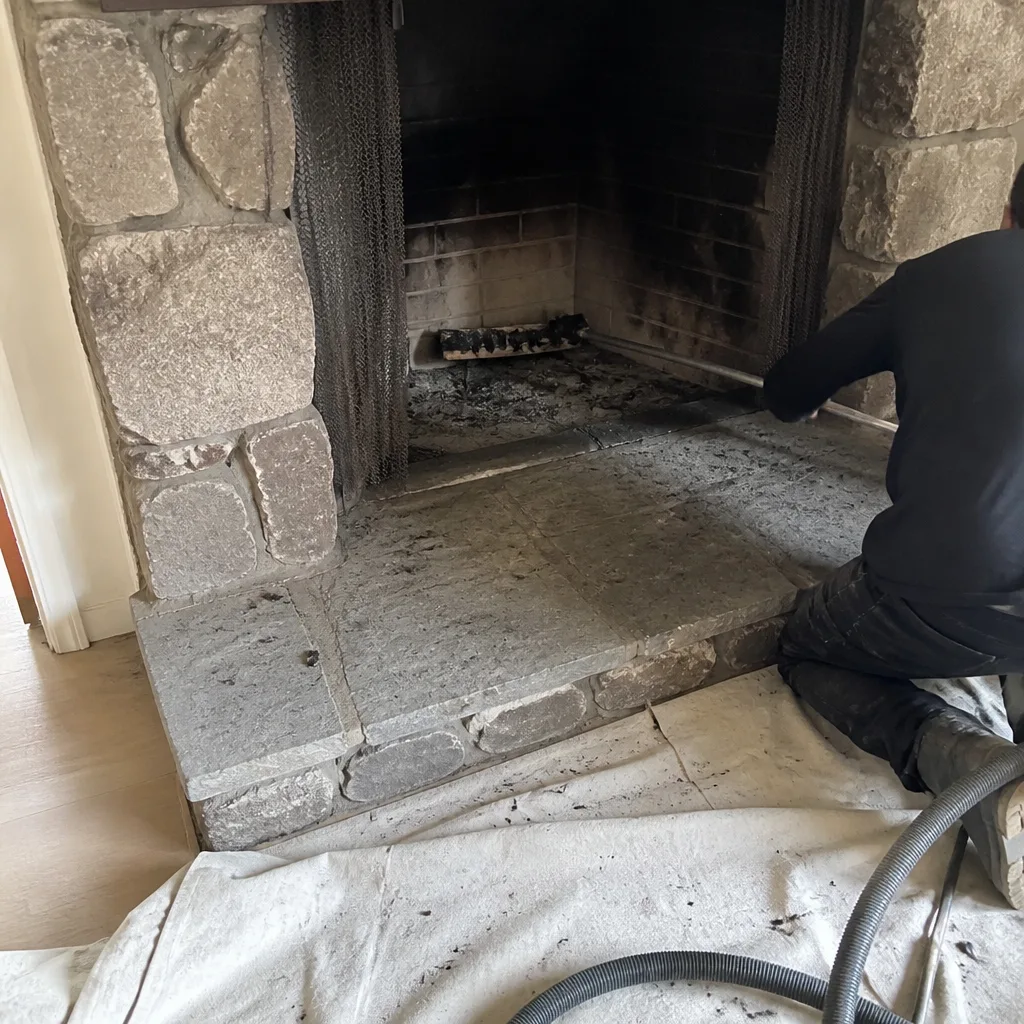 Before
 After
 Before
 After
Frequently Asked Questions
You can clean the firebox and do a visual damper and cap check yourself, but a full flue cleaning is not a safe DIY task. The flue needs a rotary tool and camera verification to determine what’s in it, and a standard brush can’t remove Stage 2 creosote. If your chimney has any glazed buildup, the professional cleaning is the only path.
Stage 2 creosote looks like shiny, glassy, or tar-like buildup on the inside of the flue, and it’s usually identified during a professional camera inspection. You can sometimes see it with a light from the damper, but the surest sign is a past sweep report. A strong tar smell that doesn’t fade is a second signal.
Creosote keeps building with every fire, and at higher concentrations it can ignite. That’s the reason chimney fires happen. In Concord, a mild winter means more idle months for the buildup to cure, and it doesn’t clear on its own. The sweep is worth booking before the season, not after the symptoms.
Most standard California homeowner policies exclude damage from inadequate maintenance. If a chimney fire traces back to self-cleaning or neglect, the insurer may deny or reduce the claim. Documented professional cleaning is the protection that holds up. Call (833) 434-1221 for an estimate – it’s free.
Once a year, ideally before the burn season starts, and annually after a pellet stove or fireplace has been in regular use. Homes burning a lot of wood, or burning wet wood, may need it more often. A quick inspection each visit tells you whether the flue is on a normal or a faster buildup cycle.
Yes. Every sweep includes a camera inspection and a photo report, so you see what the technician sees. If a repair is needed – a cracked flue tile, a bad liner joint, a damaged cap – we show you the photo evidence first, and you decide. Nothing gets recommended without documentation. Call (833) 434-1221.
The Bottom Line
DIY chimney cleaning has a real place, but it’s a small one: firebox ash, damper checks, ground-level cap looks, and pellet stove exhaust upkeep between professional visits. The full flue cleaning is a professional job because rotary equipment, camera verification, and high-volume vacuum are the tools that actually remove what builds up. A hardware-store brush kit doesn’t address Stage 2 creosote, and it can make the professional job harder and pricier. For a Concord homeowner, the practical plan is simple: one professional sweep before each burn season, small upkeep tasks yourself, and a documented inspection on file. We tell you what we found, show you why it matters, and fix it with the right material for the job.
Call (833) 434-1221 for a free estimate. We answer 24/7. Fast dispatch from 7am to 7pm, Sunday through Friday.
Written by the team at Stallion Chimney Sweep.