
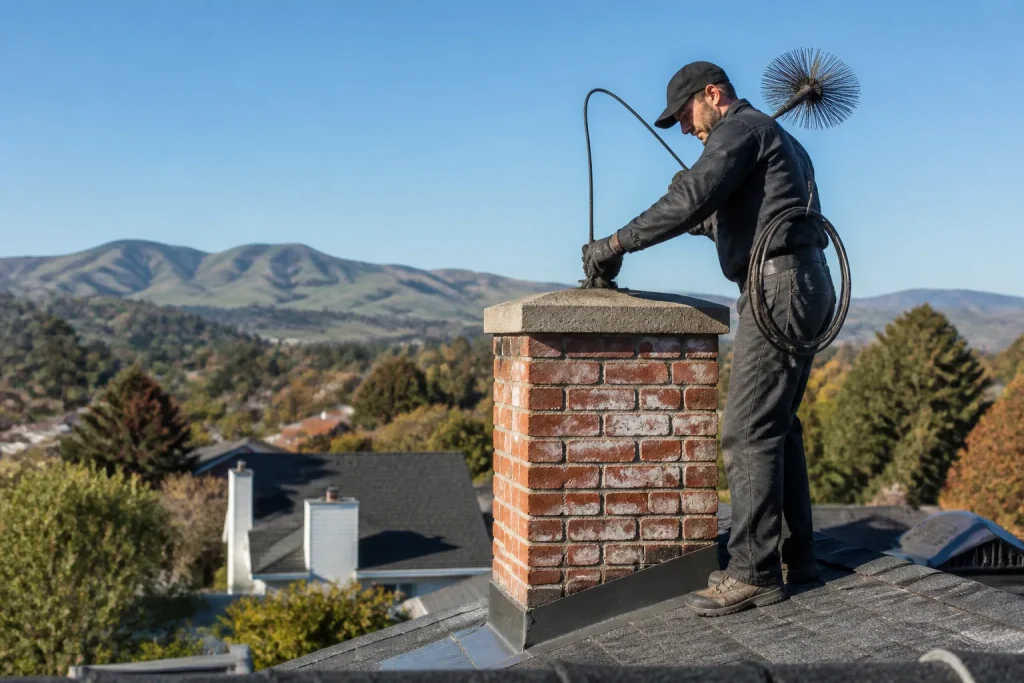
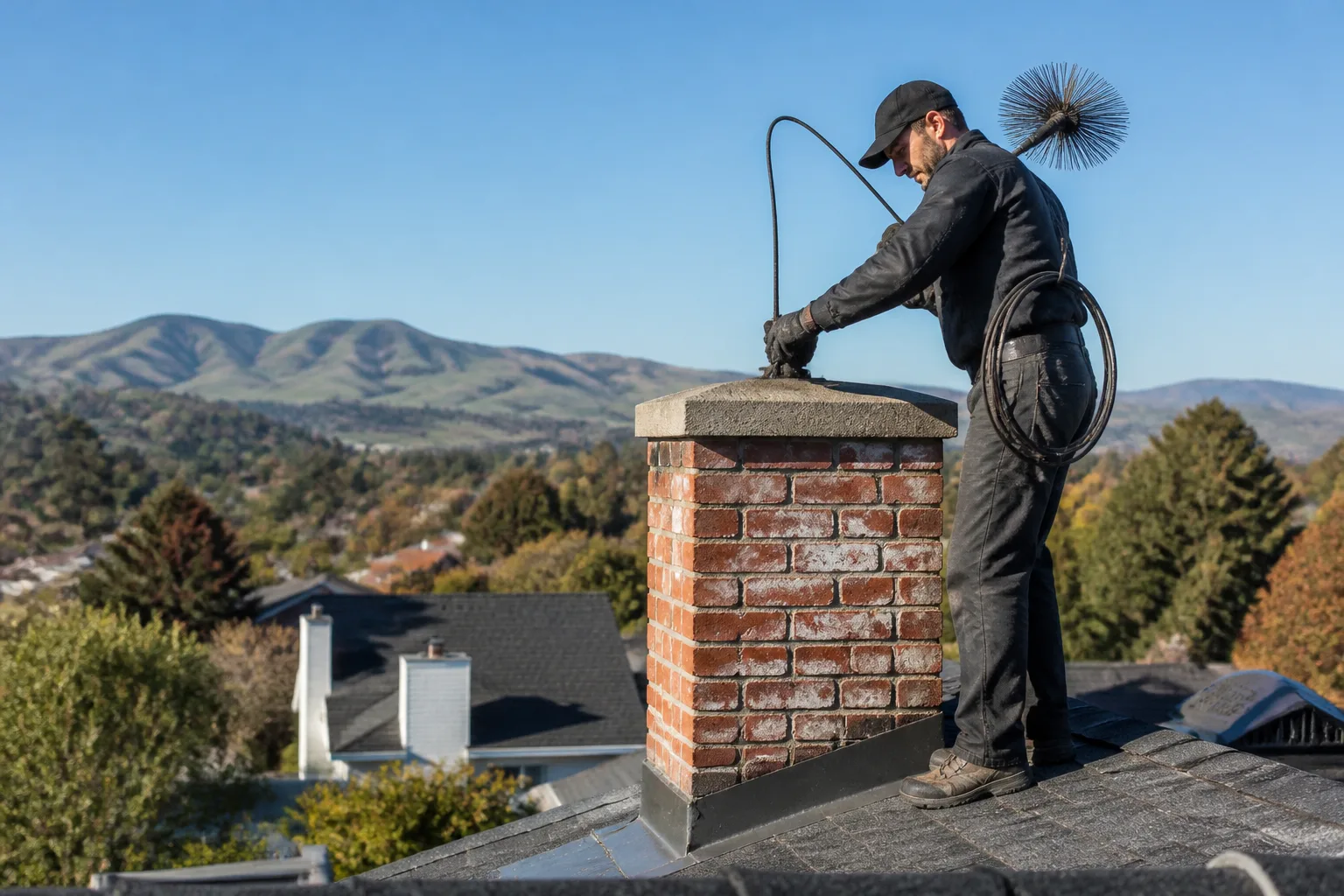
How to Choose the Right Chimney Cleaning Company in Concord
Most homeowners in Concord choose a chimney company the way they choose a pizza place: search, scan the stars, pick the closest. That works fine for dinner. It doesn’t work for a flue that vents carbon monoxide or a masonry stack holding up part of your roof. CSIA certification is the floor, not the ceiling, and some of the worst chimney work we’ve seen in Contra Costa County was done by certified sweeps who outsourced the actual labor to uncertified crews. So here’s a different approach: five questions that separate professionals from operators in one phone call.
If you’d rather skip the vetting and talk to a team that handles inspection, cleaning, and repair in-house, call (833) 434-1221. We answer 24/7. Fast dispatch from 7am to 7pm, Sunday through Friday.
The Five Questions That Separate Professionals from Operators
Ask all five before you book. One shaky answer is a yellow flag. Two should end the call. This isn’t about being difficult; it’s about knowing who’s actually going to be in your living room with a vacuum and a flashlight.
- “Who actually performs the work?” Good answer: the same crew that shows up for the inspection handles the cleaning, and any repair stays with the company. Bad answer: hesitation, or an admission that a subcontractor does the sweeping. That’s the classic setup for a certified name on the invoice and an uncertified crew on your roof.
- “Will I get a written report with photos, and can I see the flue on camera?” Good answer: yes, before you pay for anything, and yes. Bad answer: “We’ll let you know if anything looks off.” If they can’t document what they found, you have no way to verify a recommendation.
- “What materials do you use for liners and repairs?” Good answer: specific brand names and product types. Bad answer: “industry-standard materials” or “whatever the job needs.” Anyone unwilling to tell you the brand doesn’t know the brand, which means they don’t know the spec.
- “Do you do structural repair, or do you refer it out?” Good answer: repair is handled by the same team. Bad answer: “we can recommend someone.” Referral chains create handoff gaps and conflicting diagnoses.
- “What’s included in your flat price, and is the estimate written?” Good answer: a flat price for the sweep, agreed before booking, and a written estimate for anything beyond it. Bad answer: a low teaser number that turns into an itemized upsell list you can’t verify.
Notice none of these questions are about price or star ratings. In Concord, the chimney companies worth hiring are rarely the cheapest, and the review count tells you about marketing more than competence.
Why In-House Service Changes the Outcome
A company that inspects and refers repairs produces a fundamentally different result than one that does both. When the person who finds the problem also has to quote the fix, the diagnosis gets honest fast. When the inspector’s job ends at the referral, the incentive shifts: the recommendation is at arm’s length, the repair quote comes from a stranger, and nobody owns the gap if the work doesn’t match the report.
Here’s how to tell which kind of company you’re dealing with before you book:
- Ask them to name their repair materials on the phone. A full-scope company can rattle them off; a sweep-and-refer outfit will offer to “have someone call you.”
- Look for a single point of accountability in the written report. If the inspection report and repair quote come from two different letterheads, you’re in a referral chain.
- Ask who warranties the repair. One crew, one warranty, one phone number to call if something’s wrong.
At Stallion Chimney Sweep, inspection, cleaning, and chimney repair are all handled by the same team. Our technicians have up to experience, and the crew that inspects is the crew that repairs. That’s not a marketing line; it’s the reason we can tell you plainly when work can wait as well as when it can’t.
What Professional-Grade Materials Actually Look Like
Materials are where the real line gets drawn. A chimney cap from a hardware store is a different product than a Gelco or Famco cap rated for long-term exterior weathering. A “stainless liner” from a big-box shelf is a different spec than a DuraFlex flexible stainless steel system, the same grade certified chimney professionals install industry-wide.
When you’re comparing quotes in Concord, here’s what to look for:
- Liner systems: A professional quote names the system, typically DuraFlex for wood-burning, gas, or oil appliances. A vague “stainless liner” line item with no brand is a red flag.
- Flue repair: For cracked or deteriorating flue interiors, the right product is ceramic resurfacing, such as the HeatShield system, which restores the liner without full demolition in qualifying cases. If a company jumps straight to full relining without discussing this option, ask why.
- Mortar and caps: A masonry repair quote should specify the mortar type and the cap brand. Mortar mixed for the wrong application fails early, and a chimney cap is your first line of defense against water and animals.
- Supply chain: Companies that source from Olympia Chimney and Copperfield are buying from the same wholesale channels career professionals use, not consumer retail.
In our experience, a company that can’t name its materials on the spot usually can’t service them either. Professional-grade materials, not hardware-store substitutes, is the standard we hold every liner and cap to, and it’s a fair standard to hold anyone to.
How to Read a Written Inspection Report
The inspection report is a competency test you can grade at home. A good one is specific enough that a second chimney professional could pick it up and know exactly what’s going on. A vague one says “cleaning recommended” and nothing else.
Here’s what a professional report includes, and what its absence tells you:
- Dimensioned findings: Actual measurements of the flue, the firebox, and any cracked or spalling areas, not just descriptions.
- Photo documentation: Pictures of what the camera saw, numbered and referenced in the text. You should be able to look at the photo and see the problem yourself.
- Specific code references: Findings tied to the relevant NFPA standards, so you can verify the recommendation rather than take it on faith.
- A clear verdict: “Safe to use,” “safe with conditions,” or “do not use until repaired,” stated plainly.
- A written repair estimate only where the photos justify it: A report that recommends thousands of dollars of liner work without visual evidence is one you should question before signing anything.
Read the report before you pay for the sweep, not after. If the recommendation doesn’t match the photos, ask. A professional will walk you through it without offense.
Concord Context: What Local Experience Actually Means
Chimney work here isn’t the same as chimney work in the mountains or on the coast. Bay Area fog is a real factor: moisture in the air accelerates deterioration of masonry and mortar over time, especially on the exterior stack. Earthquake considerations matter for masonry chimneys, which are among the least flexible parts of a house when the ground moves. And Concord’s housing stock includes a genuine mix of older masonry fireplaces and newer factory-built systems, which take different tools, different liners, and different repair approaches.
When you’re evaluating a company, ask how they handle both types. A sweep who only knows factory-built inserts will struggle with a 1950s masonry fireplace, and vice versa. A company that services Concord regularly should be able to talk about fog-driven mortar deterioration and seismic bracing for masonry without prompting.
One more local consideration: fireplace use here is seasonal. Most Concord homeowners burn in the cooler months and let the chimney sit the rest of the year, which means the inspection is best done before the season starts, not after the first cold night when everyone else is trying to book the same week.
When to Call a Pro
Some chimney issues are safe to watch. Others aren’t. Call a professional if you notice any of the following:
- Strong creosote smell in the house, especially on warm days
- Smoke rolling back into the room when you light a fire
- Visible cracks in the firebox brick, the flue tiles, or the exterior mortar
- A chimney cap that’s loose, rusted, or missing
- Any carbon monoxide alarm event with a fireplace or gas appliance running
Carbon monoxide is the reason we don’t talk homeowners through flue work on the phone. A blocked or cracked flue can vent combustion gases into the living space, and that’s a trained-professional job, full stop. Cleaning and inspection are where it starts; chimney sweep service is best booked before the season, not after a scare.
Related services in Concord: chimney sweeping, chimney inspection, and chimney repair, all handled by the same team.
The Bottom Line
Hiring a chimney company in Concord comes down to a handful of questions, not a star rating. Ask who does the work, whether you’ll see the camera footage and a written report, what materials they use, whether repair stays in-house, and whether the price is flat and written. The answers tell you everything.
If you’re in Stallion Chimney Sweep territory and need help, we offer free estimates. Call (833) 434-1221. We answer 24/7. Fast dispatch from 7am to 7pm, Sunday through Friday. We’re closed Saturday.
Frequently Asked Questions
No. Certification is the baseline, not a guarantee. Ask whether the certified professional performs the work or subcontracts it to an uncertified crew. Some of the worst chimney work in Contra Costa County has been done under a certified name with uncertified labor. Certification plus in-house crews plus a written report is the combination worth hiring.
You should see the evidence yourself. A legitimate recommendation comes with camera footage, photo documentation, and dimensioned findings in a written report. If a company tells you that you need thousands of dollars of liner work without showing you why, get a second opinion before signing. Work that can safely wait should be stated as such.
A sweep removes creosote, soot, and debris from the flue and firebox. An inspection assesses the condition of the chimney: the flue, the firebox, the cap, the mortar, and the overall structure. Most professional companies perform both in a single visit, with the inspection report documenting the findings before the cleaning begins. Ask which one you’re booking, and whether the report is included.
Most wood-burning chimneys need sweeping when creosote buildup reaches about 1/8 inch, which for typical use is roughly once a year. Gas appliances need annual inspection even though they produce less creosote. Because Bay Area fog accelerates exterior masonry deterioration, the annual visit is also the point where mortar and cap issues get caught early, before they turn into structural repairs. Call (833) 434-1221 for an exact quote on a sweep and inspection; estimates are free.
Written by the team at Stallion Chimney Sweep.
Need Chimney Cleaning Help?
Call Stallion Chimney Sweep - licensed & insured, with free written estimates in Concord.
(833) 434-1221